
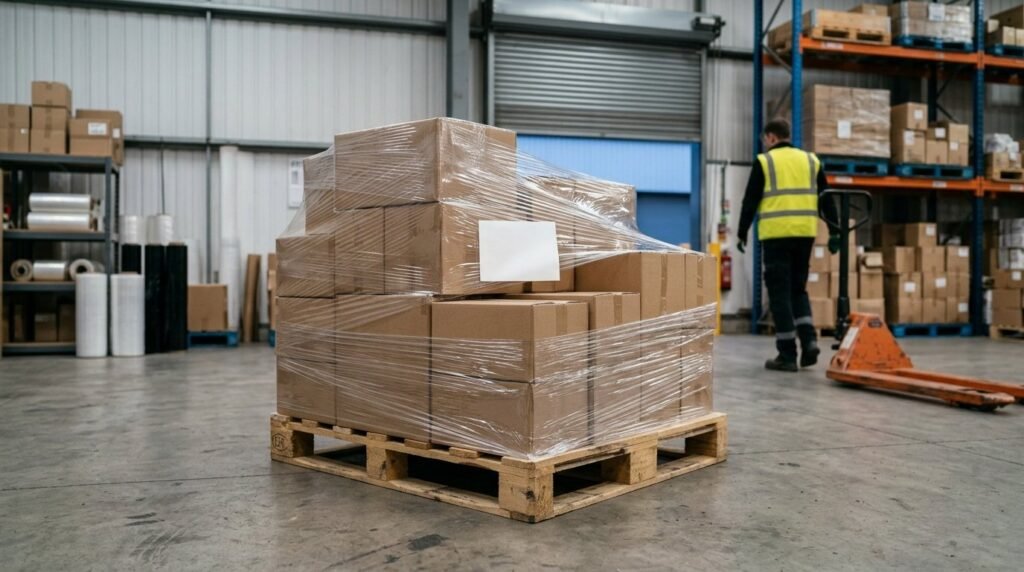
How to Wrap a Pallet: A Step-by-Step Guide for UK Businesses
By the Samz Packaging team, Bradford, UK · Updated November 2026
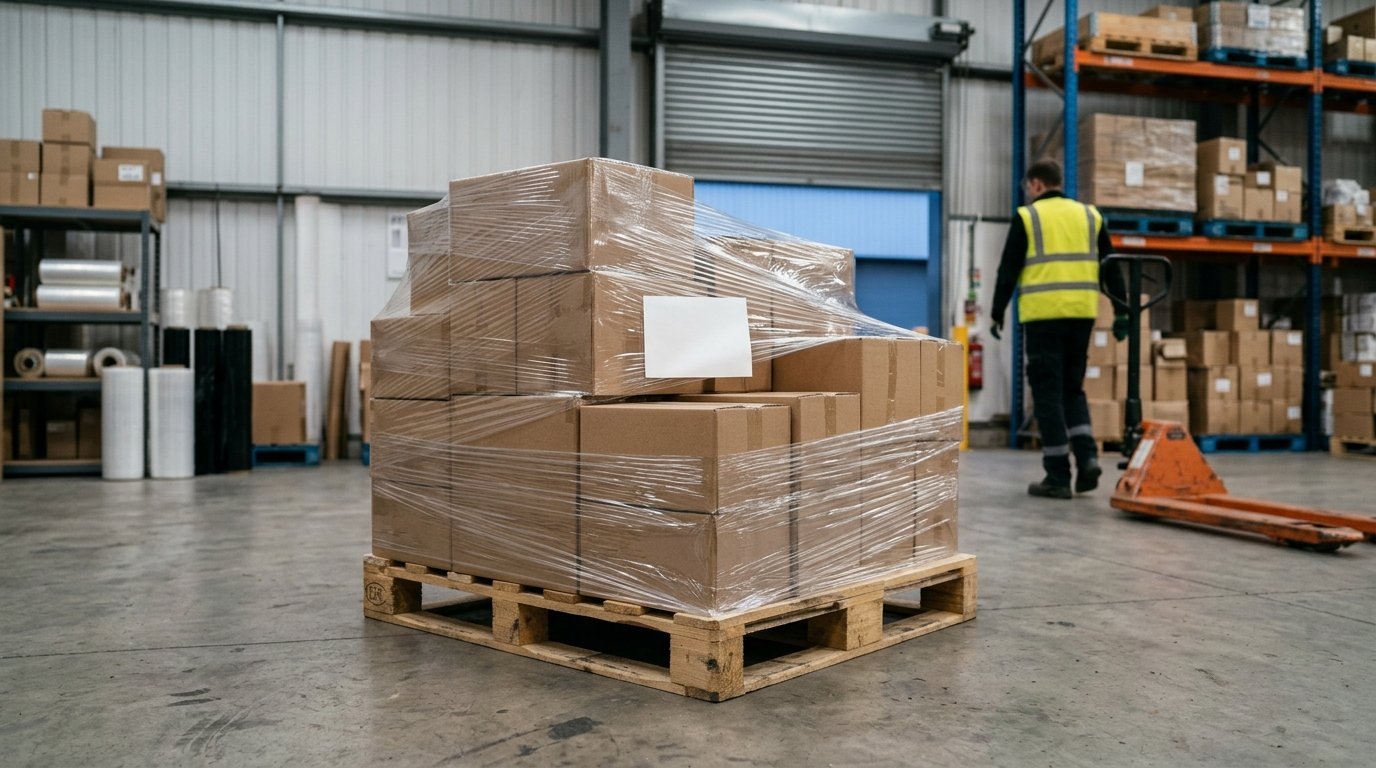
To wrap a pallet, anchor the stretch film to the base, wrap upwards with each turn overlapping the last by at least a third, carry the film over the top, and finish with three to five layers in total. Tuck the end under so it cannot snag, then add your label.
Why wrapping a pallet properly matters
A pallet that is wrapped well arrives in one piece. Stretch film holds cartons together, keeps the load tight on the pallet, and protects it from dust and damp. A poorly wrapped pallet, with loose film or gaps, is the one that shifts, leans and loses boxes on the way. Whether you are a small online seller sending one pallet a week or a warehouse dispatching dozens a day, the method below keeps the load stable.
What you need before you start
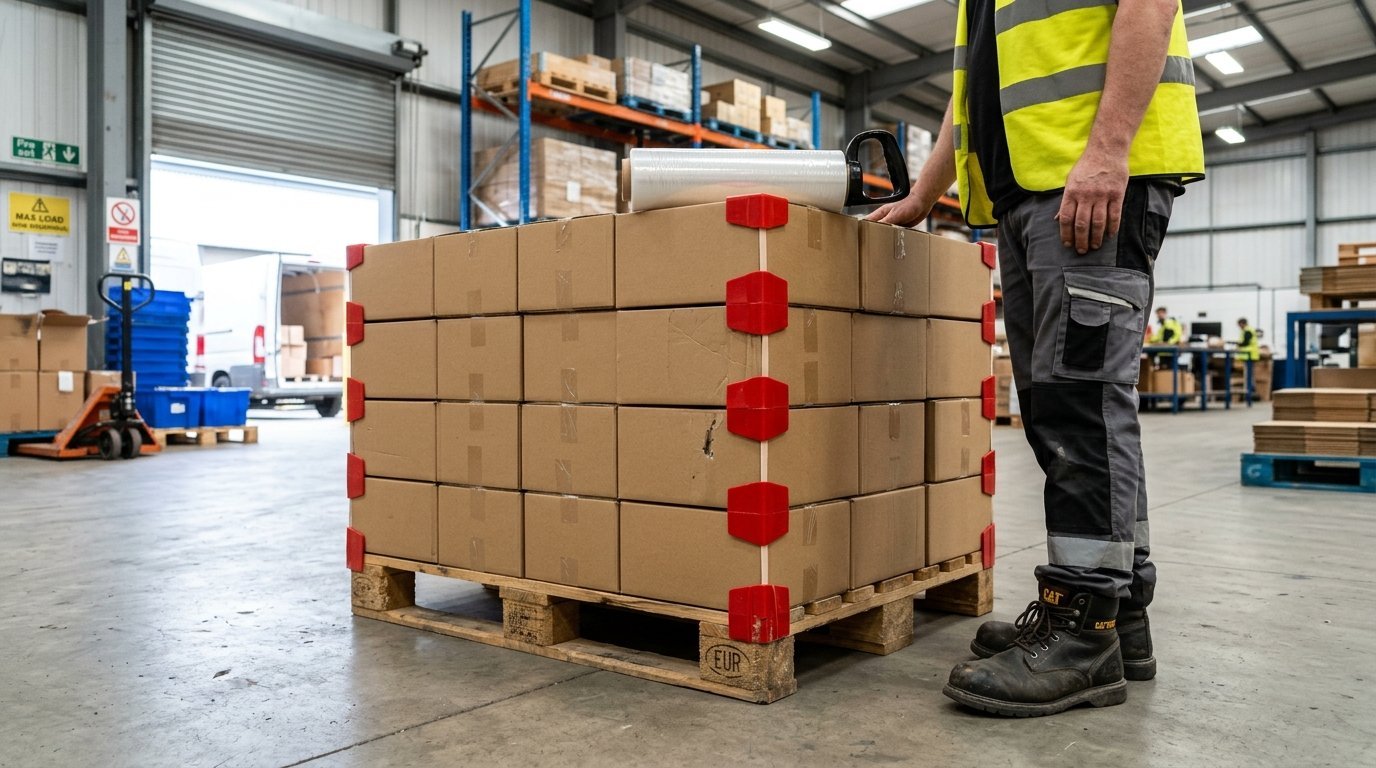
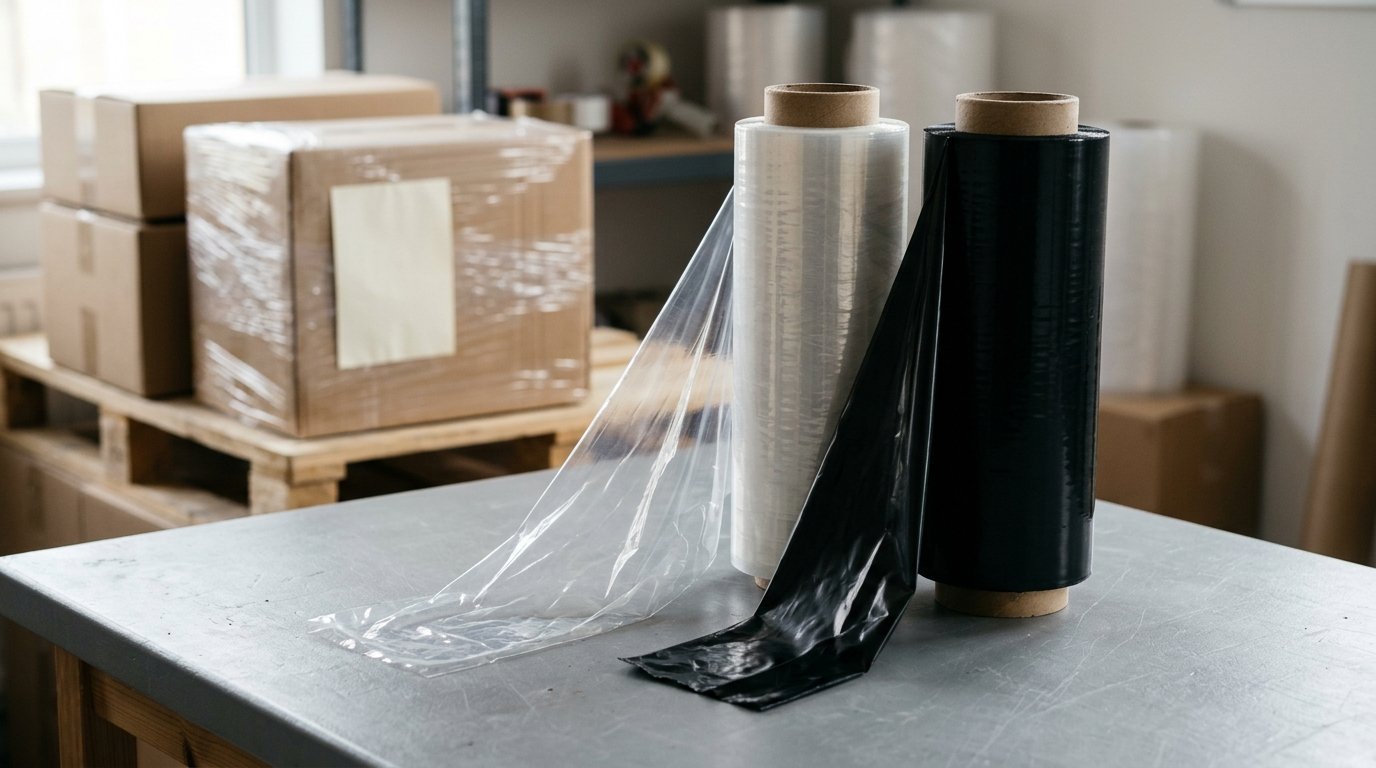
- Stretch film: our pallet wrap comes in clear and black on 250 m rolls, in 400 mm and 500 mm widths.
- A stable, evenly stacked load: boxes should be square to the pallet and not overhang the edges.
- Tape, straps or corner protectors for tall, heavy or fragile loads.
- A label with the delivery address, ready to apply at the end.
Most UK pallets are around 1200 x 1000 mm, and a 500 mm roll lets you cover a taller load in fewer passes. For lighter stacks, a 400 mm roll is easier to handle.
How to wrap a pallet by hand: 9 steps
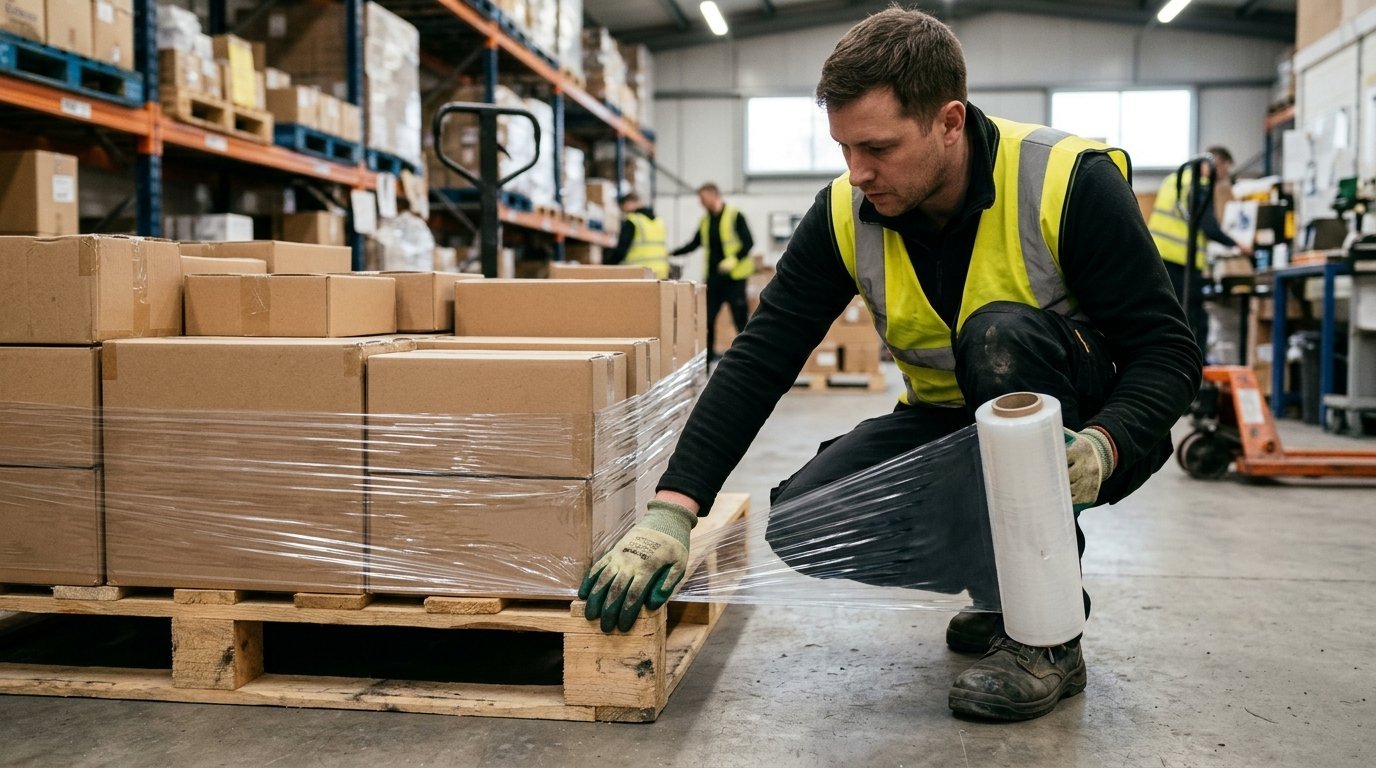
- Stack and stabilise the load. Build the load evenly with heavier boxes at the bottom. Use straps or corner protectors for tall or heavy pallets.
- Anchor the film. Pull out about 60 cm of film and fasten it to the pallet base or a corner block so it cannot slip.
- Wrap the base first. Make two or three turns around the pallet and the bottom of the load, so the film locks the cartons to the pallet.
- Spiral upwards. Walk around the pallet and keep the film under tension as you rise. Overlap each turn by at least a third of the previous one, with no gaps.
- Cover the top. Carry the film across the top of the load, alternating corners, so the top boxes are held in as well.
- Come back down. Spiral down again to add a second layer, and repeat until you have three to five layers in total.
- Add extra turns where needed. Heavier or uneven loads need more film at the base and around the middle.
- Finish cleanly. Cut the film, tuck the end under a layer so it cannot snag, and press it flat. Tape the base if you want extra security.
- Check and label. Push on each side to check the wrap is tight and even, then apply your delivery label.
Choosing the right pallet wrap
The film you use makes a difference to how easy the job is and how secure the pallet ends up. Here is how to choose.
| Choose | When |
|---|---|
| Clear pallet wrap | You want to see and scan labels through the film, or check the load at a glance. |
| Black pallet wrap | You want to hide the contents and discourage tampering. |
| 500 mm width | Taller loads, so you can cover more of the pallet in each pass. |
| 400 mm width | Lighter, shorter loads and easier handling by hand. |
Browse the full pallet wrap collection, or read the details on our 400 mm clear roll and 500 mm black roll.
Common pallet wrapping mistakes
- Not anchoring the film. If the start is loose, the whole wrap can unravel.
- Wrapping with no tension. Film that is simply wound on, not stretched, will not hold the load.
- Gaps between turns. Every turn should overlap the last by at least a third.
- Forgetting the top. Loose boxes on top are the first to fall.
- Letting the load overhang. Goods should sit within the edges of the pallet.
- Using too few layers. Three to five is the usual range, with more for heavy or uneven loads.
Hand wrapping or a machine?
Wrapping by hand is quick and cheap for a handful of pallets a day, and needs only a roll of film. If you wrap dozens of pallets every day, a wrapping machine saves time and film, but for most small businesses and online sellers hand wrapping is the sensible starting point.
Pallet wrapping FAQs
How many layers of pallet wrap should I use?
Use three to five layers as a general rule, overlapping each turn by at least a third. Heavy, tall or uneven loads need more layers, especially around the base.
How do I start wrapping a pallet?
Pull out about 60 cm of film and fasten it to the pallet base or a corner block, then make two or three turns around the bottom before you start to spiral upwards.
Which is better, clear or black pallet wrap?
Clear lets you see and scan labels through the film. Black hides the contents and discourages tampering. Both work the same way, so choose by how visible you want the load to be.
What width of pallet wrap should I buy?
A 500 mm roll covers taller loads in fewer passes, and a 400 mm roll is lighter and easier for shorter loads. We stock both widths on 250 m rolls.
Can I wrap a pallet without a dispenser?
Yes. Hand rolls can be used with just your hands, though a dispenser puts less strain on your back and helps keep the film under tension.
More UK packaging guides
Stock up on pallet wrap
Clear and black heavy duty pallet wrap on 250 m rolls, sent from Bradford across the UK. Order before 2 PM for same-day dispatch.

No Comments