
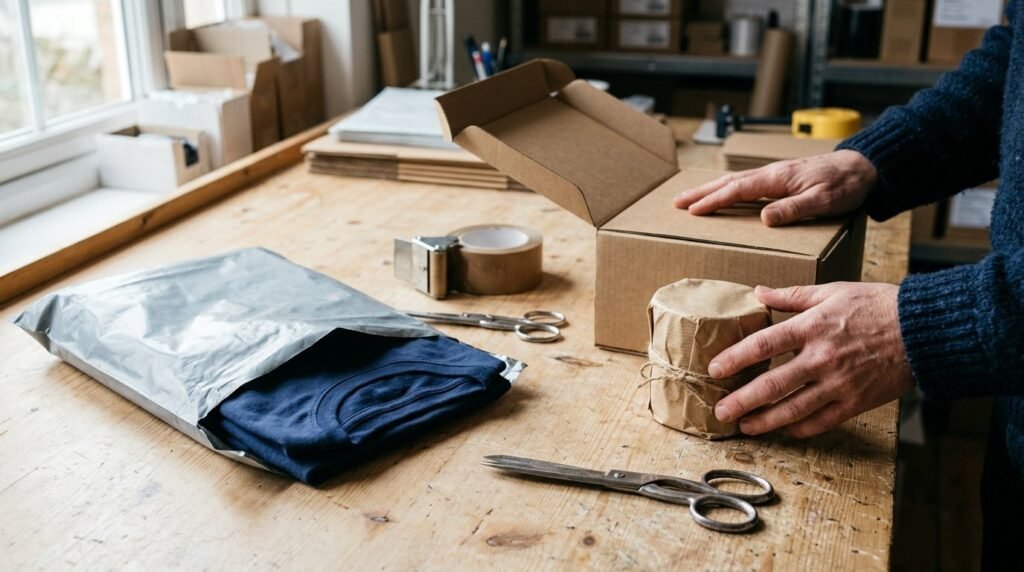
Mailing Bags vs Boxes: What Should UK Online Sellers Use?
By the Samz Packaging team, Bradford, UK · Updated November 2026
Use mailing bags for soft, non-fragile items such as clothing and textiles, because they are light, flat and cheap to post. Use boxes for anything rigid, fragile or valuable that needs protection. If you are unsure, choose the box.
Mailing bags vs boxes: the main differences
Both do the same job, getting an order to the customer in one piece, but they suit different products. The right choice protects the item, keeps postage down and gives a good first impression.
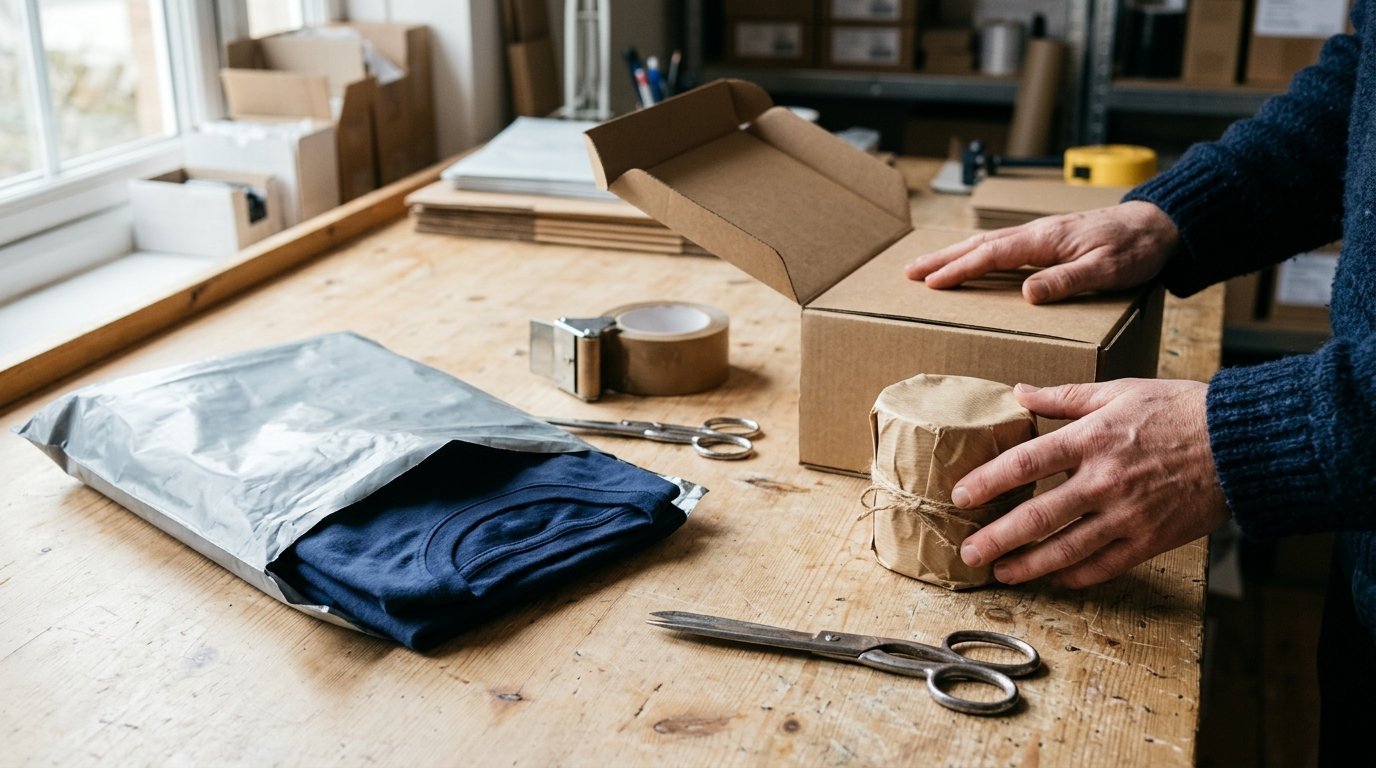
| Mailing bags | Boxes | |
|---|---|---|
| Best for | Clothing, scarves, bedding, soft goods | Fragile, rigid or valuable items |
| Protection | Good against dirt and wet, little crush protection | Strong crush and impact protection |
| Weight and bulk | Very light and flat | Heavier and bulkier |
| Storage | Takes up very little space | Needs more room, even flat packed |
| Postage cost | Often lower because the parcel stays thin and light | Often higher because of size and weight |
Royal Mail size limits you need to know
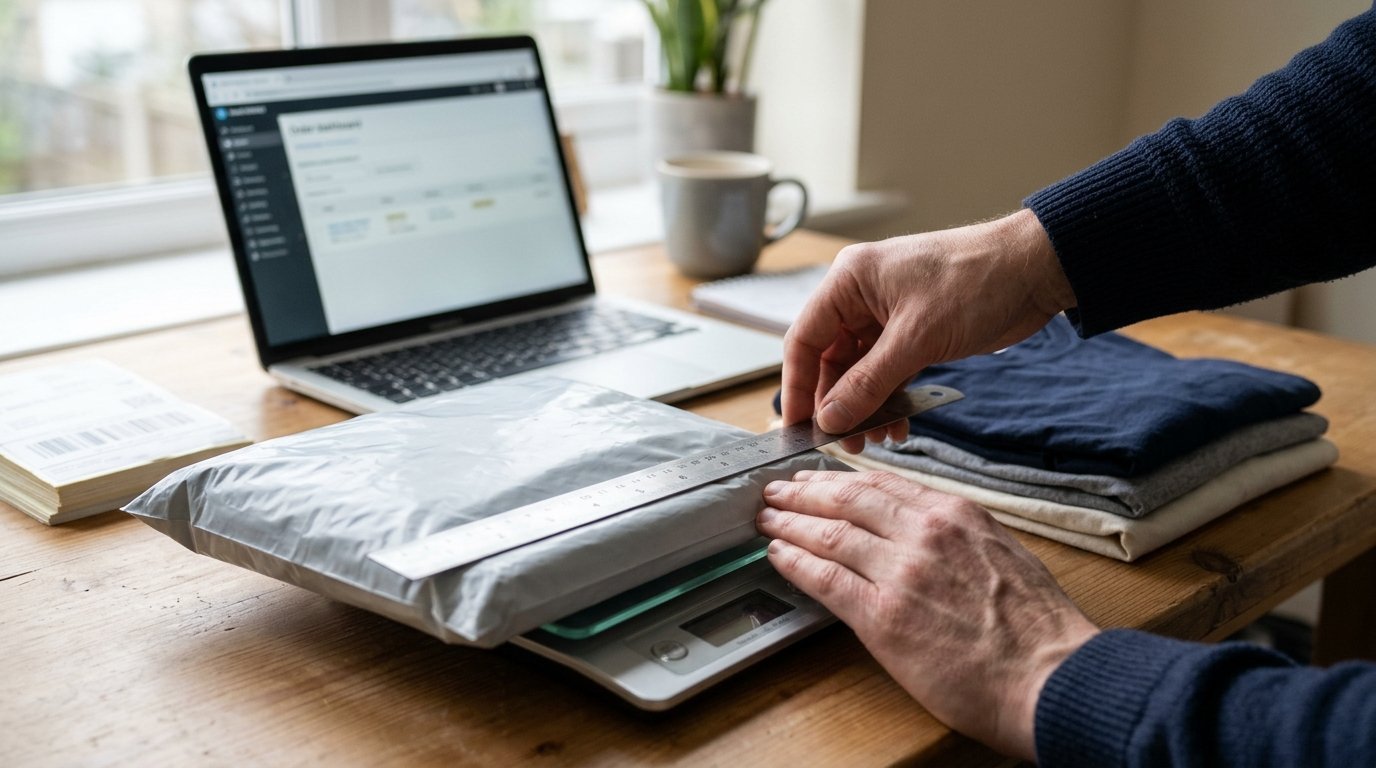
For UK sellers, the size of the packed parcel often decides the price. Royal Mail’s published limits for two common formats are:
| Format | Maximum size | Maximum weight |
|---|---|---|
| Large Letter | 353 x 250 x 25 mm | 750 g |
| Small Parcel | 450 x 350 x 160 mm | 2 kg |
Tip: A slim mailing bag can stay within the 25 mm Large Letter thickness if you do not overfill it. Royal Mail’s limits can change, so check royalmail.com before you set your prices.
When mailing bags are the right choice
- Clothing, knitwear, scarves and accessories
- Bedding, towels and other soft textiles
- Flat, lightweight, non-fragile items
- Orders where keeping postage costs low matters most
Pick a size that holds the item without strain, with a little room to fold the flap and seal it cleanly. A bag that is stretched tight is more likely to burst.
When you should use a box instead
Choose a box for glass, ceramics, electronics, candles, gift sets and anything that would be damaged by being squashed. If the item has a hard edge or a corner that could push through a bag, a box is the safer choice. A box also stacks neatly in a courier van, which cuts the chance of crush damage.
Seal cartons properly with good packing tape. Our guide to which packaging tape to use explains the H-seal method that keeps boxes closed in transit.
Choosing a grey mailing bag size
Our grey mailing bags are lightweight and discreet, and come in a wide range of sizes from small bags for accessories up to large bags for bulky soft goods. The size of each bag is shown in its product name, so you can match it to your product:
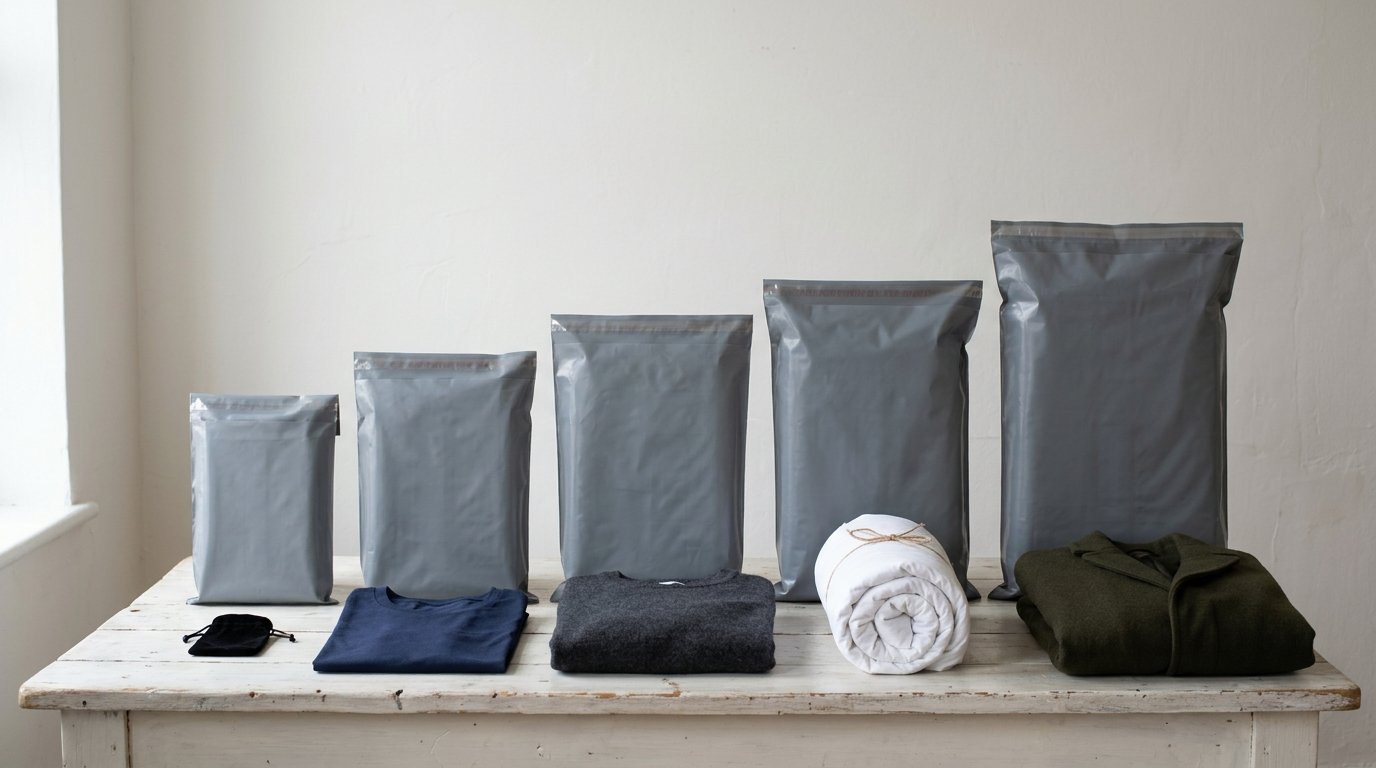
- Small accessories and jewellery: see the 4.5 x 7 and 6.5 x 9 sizes.
- T-shirts, tops and folded clothing: see the 12 x 16 and 14 x 21 sizes.
- Coats, bedding and bulky items: see the 28 x 34 size and above.
Browse the full mailing bags range to compare every size.
How to pack a mailing bag
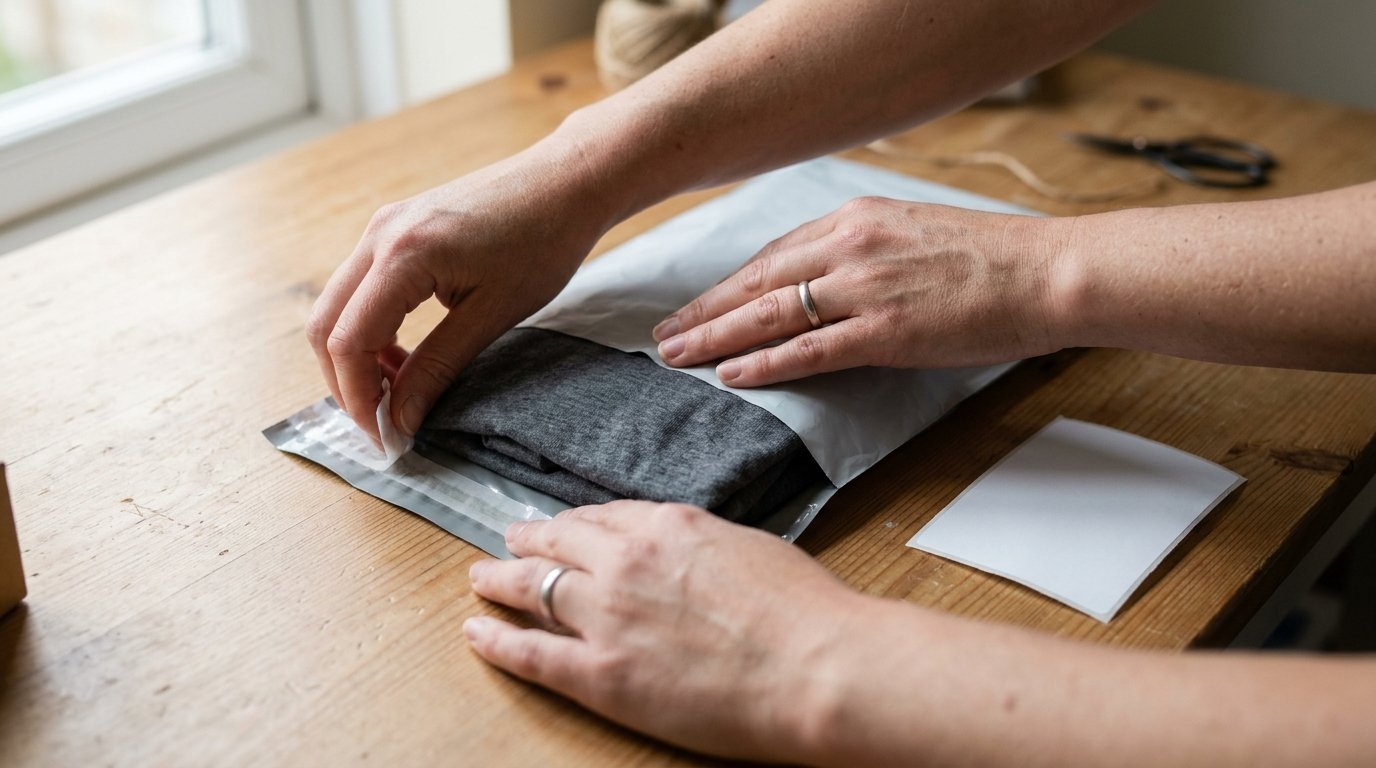
- Fold or roll the item so it lies flat and does not bulge.
- Add a layer of tissue or an inner bag if you want to keep the item clean or protect a delicate fabric.
- Do not overfill the bag. Leave room to fold the flap and seal it.
- Press the seal firmly along its whole length and check it before posting.
- Attach the label flat so it can be scanned easily.
Mailing bags vs boxes FAQs
Are mailing bags cheaper to post than boxes?
Often, yes. A bag is lighter and flatter than a box, so a parcel in a bag is more likely to fit a cheaper Royal Mail size band. The saving depends on the final size and weight of the parcel.
What can I send in a mailing bag?
Soft, non-fragile items such as clothing, scarves, towels and bedding are ideal. Avoid sending rigid, fragile or sharp items in a bag, because it offers little crush protection.
What are the Royal Mail Large Letter and Small Parcel limits?
Royal Mail’s published limits are 353 x 250 x 25 mm and 750 g for a Large Letter, and 450 x 350 x 160 mm and 2 kg for a Small Parcel. Check royalmail.com for the latest limits.
Which size mailing bag should I buy?
Choose a bag slightly larger than the folded item so you can seal the flap without straining the bag. The size of each of our grey mailing bags is shown in the product name.
Should I use a box or a bag for fragile items?
Use a box. A bag does not protect against crushing or impact, so fragile items, glass and electronics should always go in a sturdy box with suitable padding.
More UK packaging guides
Find the right mailing bag
Grey mailing bags in sizes from small to extra large, sent from Bradford. Order before 2 PM for same-day dispatch, with free UK delivery over £50.
No Comments